
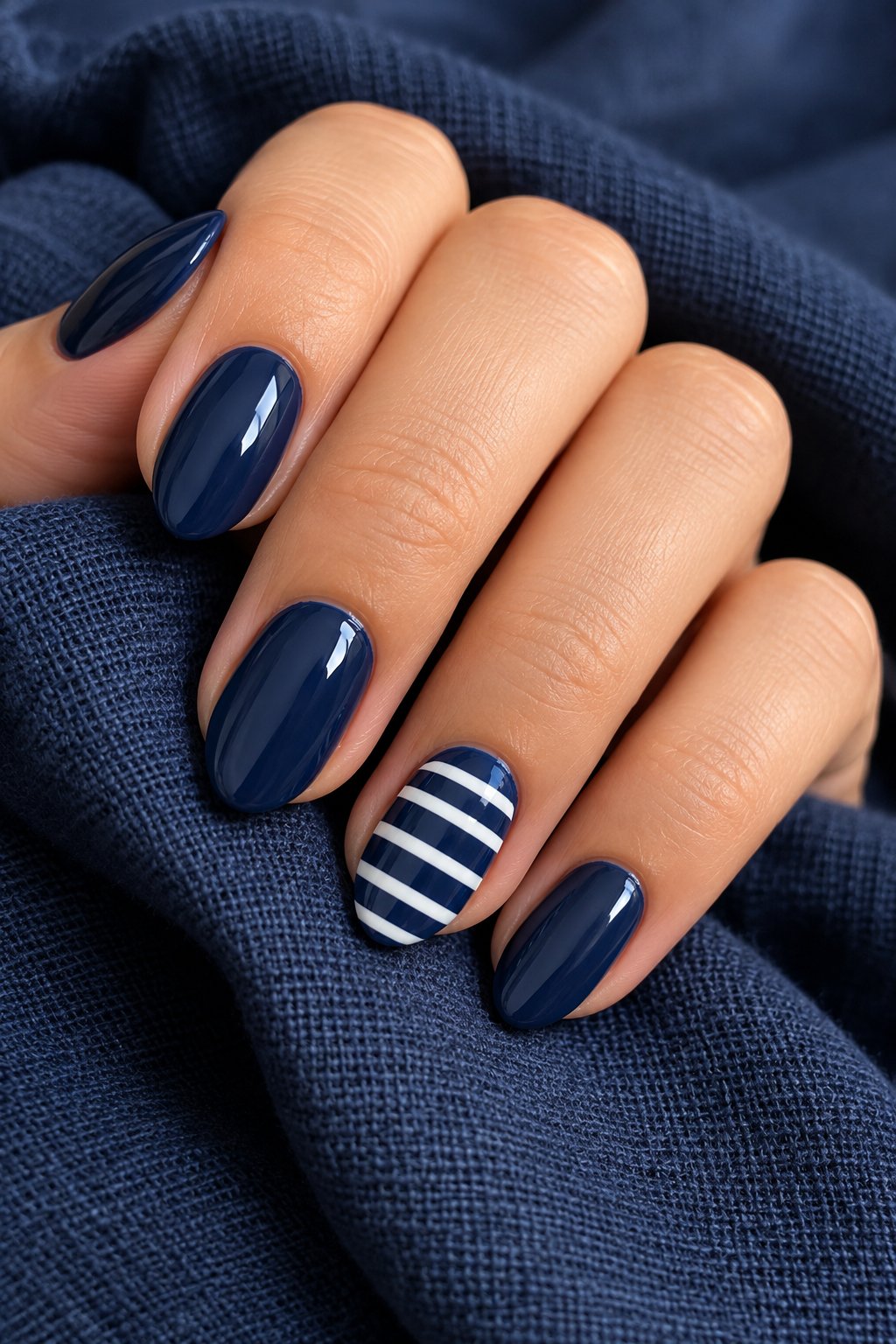
Navy blue and white is one of those color pairings that works in nail art for the same reason it works everywhere else, on sailboats, kitchen tiles, summer dresses. The contrast is sharp enough to read clearly from across a room, but the palette itself feels classic rather than trendy, which is part of why it keeps coming back season after season.
This guide covers six navy and white nail designs, from a simple French tip to more detailed patterns like checkerboard and gingham. Every design includes real how-to tips for painting it yourself. We’ll also cover why this color combination works so consistently well, how to keep a two-tone design looking crisp, and answers to the questions people ask most before trying it.
It’s worth noting upfront that these six designs range quite a bit in difficulty. A French tip or starry night set is realistic for a first attempt at home, while checkerboard and gingham genuinely take practice to get looking clean. None of that should discourage you from trying the harder ones, just know going in that a slightly uneven first attempt at a grid pattern is completely normal and still looks intentional once it’s finished.
Choosing Which Design Fits the Occasion
Not every look on this list suits every setting equally well. The French tip and marble designs read as polished enough for work or a formal event, while checkerboard, gingham, and waves lean more casual and playful, better suited to weekends, vacations, or creative workplaces with a more relaxed dress code.
Starry night sits somewhere in between, dressy enough for an evening out but not as buttoned up as a French tip. If you’re only choosing one design to try first and want the most versatile option, the French tip is the safest starting point since it works across the widest range of situations.
Why Navy and White Work So Well Together
Navy sits dark enough to read as a genuine color statement without tipping into black’s starkness, and white provides the cleanest possible contrast against it. Unlike pairing navy with a bright color, which can compete for attention, white simply highlights whatever shape or pattern it’s used in, letting the design itself do the work.
This pairing also happens to suit nearly every skin tone. Warmer undertones and cooler undertones both read well against navy specifically, which isn’t true of every dark color, and white as an accent doesn’t shift how the navy itself looks the way a colored accent might.
Getting Your Nails Ready First
Two-tone designs show any unevenness in your natural nail more than a single solid color does, so a little extra prep pays off. Push back cuticles after a warm soak, buff the nail surface lightly so both colors have something to grip, and wipe with rubbing alcohol right before painting to remove any oil left behind.
A base coat matters under navy specifically, since dark polish stains natural nails more noticeably than lighter colors do. Skipping it is one of the most common reasons people end up with a yellowish tint on their natural nails after wearing navy for a week or two.
1. Classic Navy French Tip
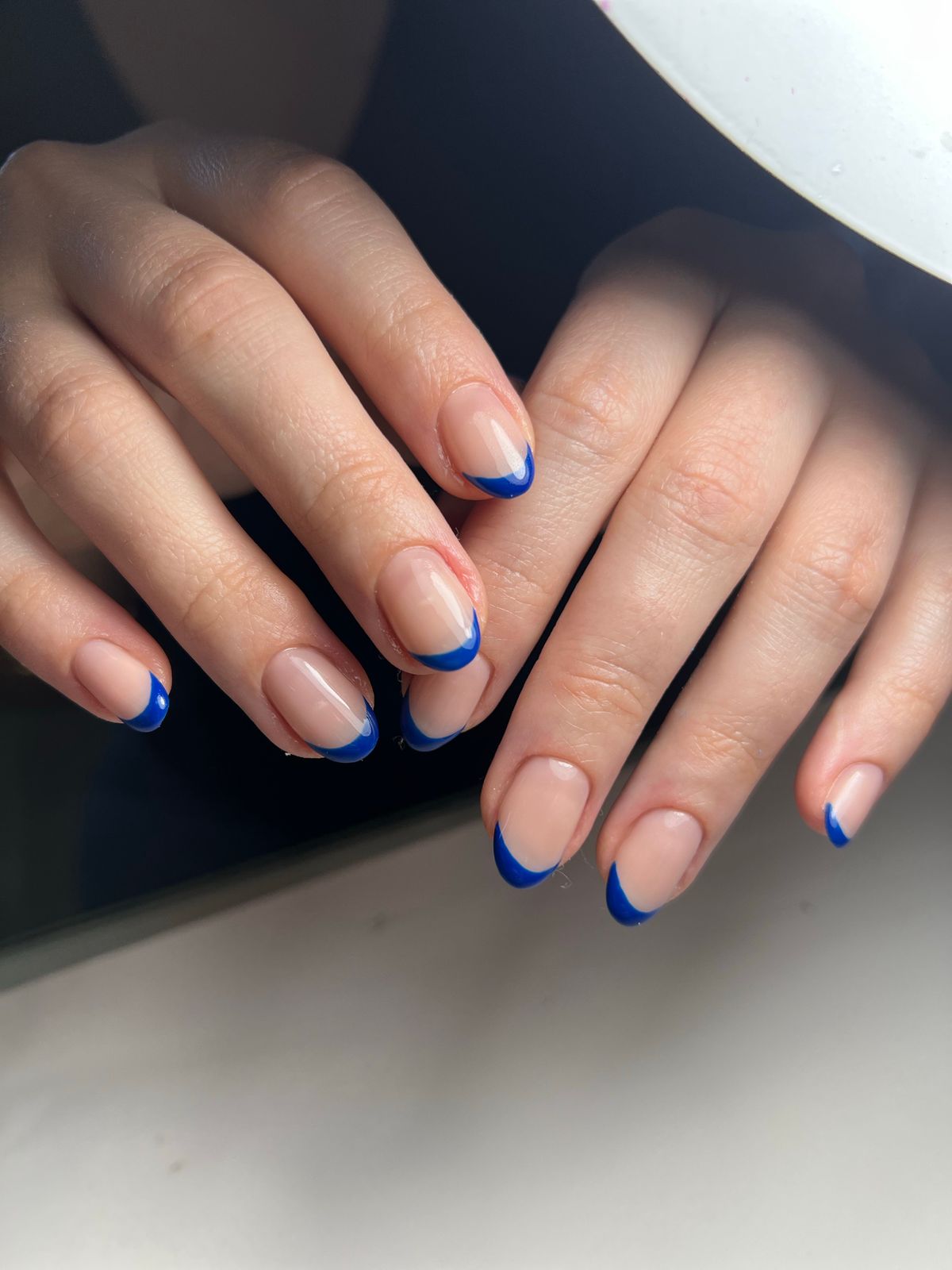
Swapping the traditional white tip for navy on a sheer nude base gives you a French manicure that feels current without losing the polished, structured quality the classic style is known for. It’s genuinely one of the most wearable designs on this list, since it works for nearly any setting from the office to a wedding.
To paint this yourself, apply a sheer nude or your natural nail color as the base, then use a thin brush or a French tip guide sticker to paint a clean navy line along the tip, following the natural curve of your nail. Two thin coats on the tip give a fully opaque navy without looking thick or clumpy.
Best for: anyone who wants a subtle way to wear navy without a full solid color, and it’s one of the easiest designs on this list to keep looking neat as it grows out. Because the color sits only at the tip, a small amount of regrowth barely changes how the set looks day to day.
2. Navy and White Marble Nails
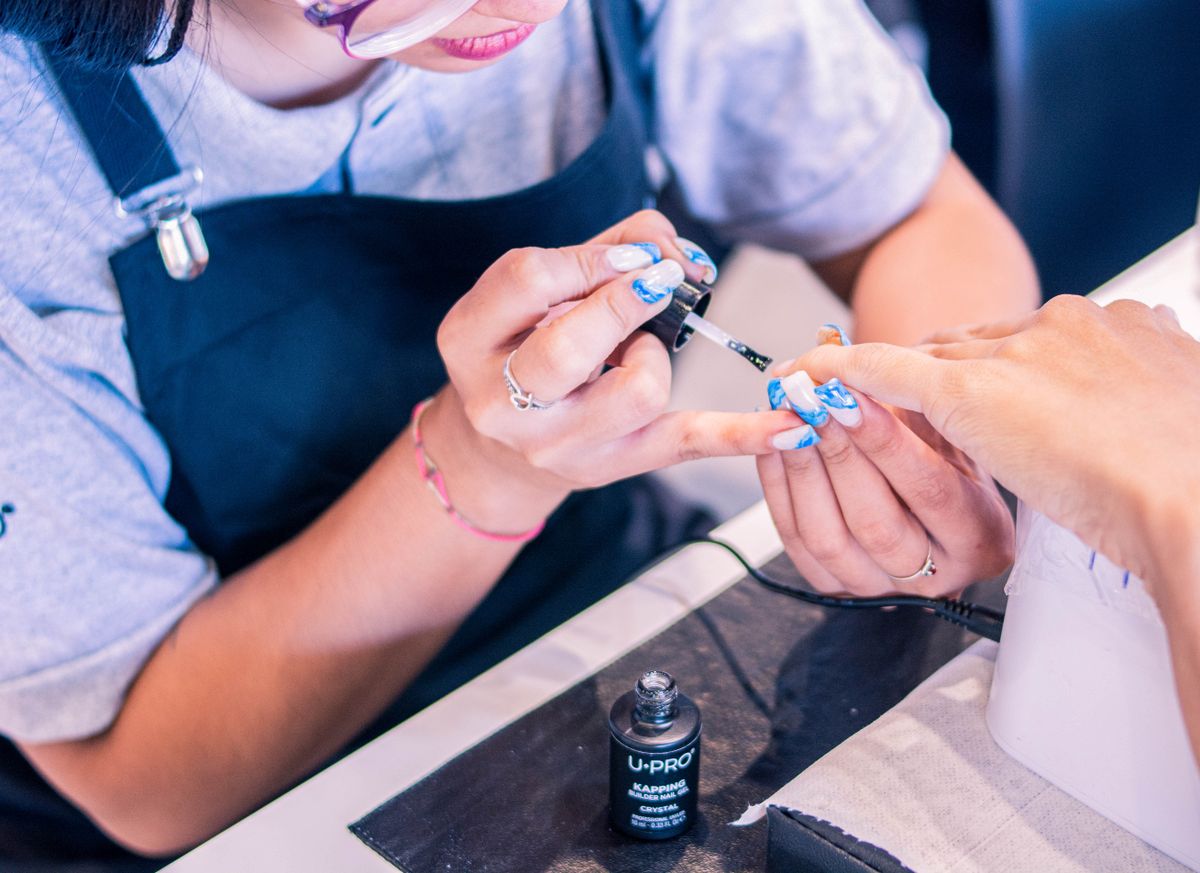
A soft, swirled marble effect in navy and white reads as artistic and a little unpredictable, since no two nails ever come out looking quite the same. This is one of the more detailed designs on this list, and it’s genuinely one that benefits from a salon visit if you want the swirls to look clean and deliberate rather than muddy.
If you’re painting it yourself, work on a white base and drag a thin brush through wet navy polish in loose, curving strokes, letting the two colors blend slightly at the edges rather than staying in separate zones. Working on one nail at a time before the polish sets is the key to getting a genuinely marbled look instead of solid patches of each color.
Best for: anyone who wants a design with real visual depth, and it’s worth bringing a reference photo if you’re having it done professionally, since marble effects vary a lot between nail techs. No two sets will ever look identical, which is part of the appeal rather than a drawback.
3. Navy and White Checkerboard Nails
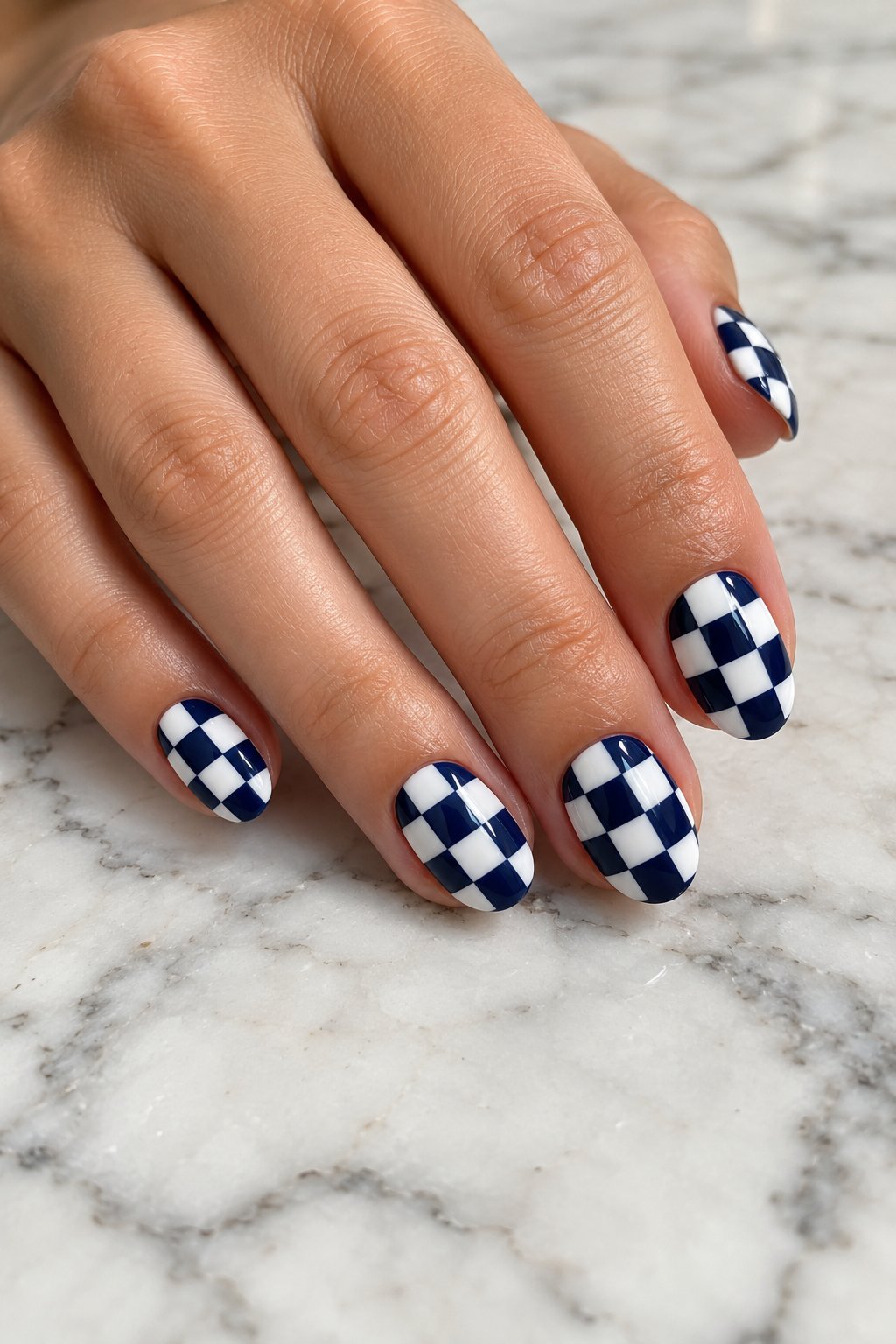
Checkerboard has had a real moment in nail art recently, and the navy and white version specifically reads as bold without feeling as loud as a brighter color combination would. The graphic, evenly spaced squares give the whole set a clean, almost architectural look.
This design takes patience more than skill. Start with a white base, then use a thin striping brush to mark out a grid of evenly spaced lines both vertically and horizontally, and fill in alternating squares with navy. Striping tape, applied in a crosshatch pattern before painting, is a genuine shortcut if freehand grid lines feel too fussy.
Best for: anyone who wants a strong graphic statement, and it pairs especially well with simple, monochrome outfits that let the nails stand out. Uneven square sizing is more noticeable here than on almost any other design on this list, so this is one worth practicing on paper before committing to a full set.
4. Navy and White Gingham Nails
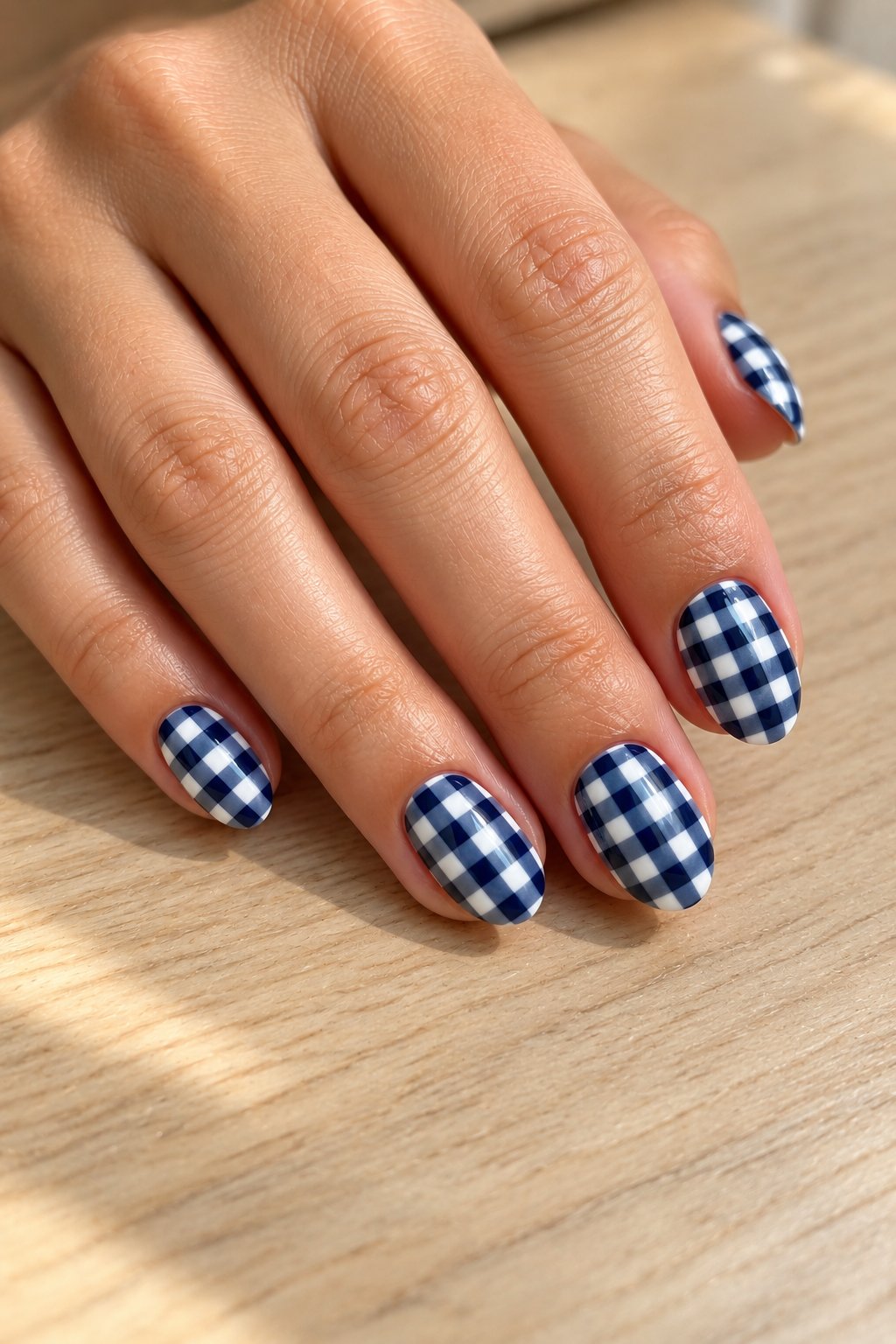
Gingham, the small woven-look check pattern you’d recognize from a picnic blanket, translates surprisingly well to nails and gives off a softer, more playful feel than the bolder checkerboard version. It’s a strong pick for spring and summer specifically, when the picnic-blanket association actually fits the season.
The technique is similar to checkerboard but on a smaller scale: thin, closely spaced navy lines in both directions over a white base, with the overlapping intersections filled in slightly darker to mimic how woven fabric looks. A fine detail brush is worth the investment here, since the lines need to stay thin and evenly spaced to read as gingham rather than a loose grid.
Best for: spring and summer occasions, picnics, and garden parties specifically, and for anyone who wants a pattern that feels more delicate than checkerboard. It also scales down well to an accent-nail-only version if a full set of gingham feels like too much detail work.
5. Starry Night Navy Nails
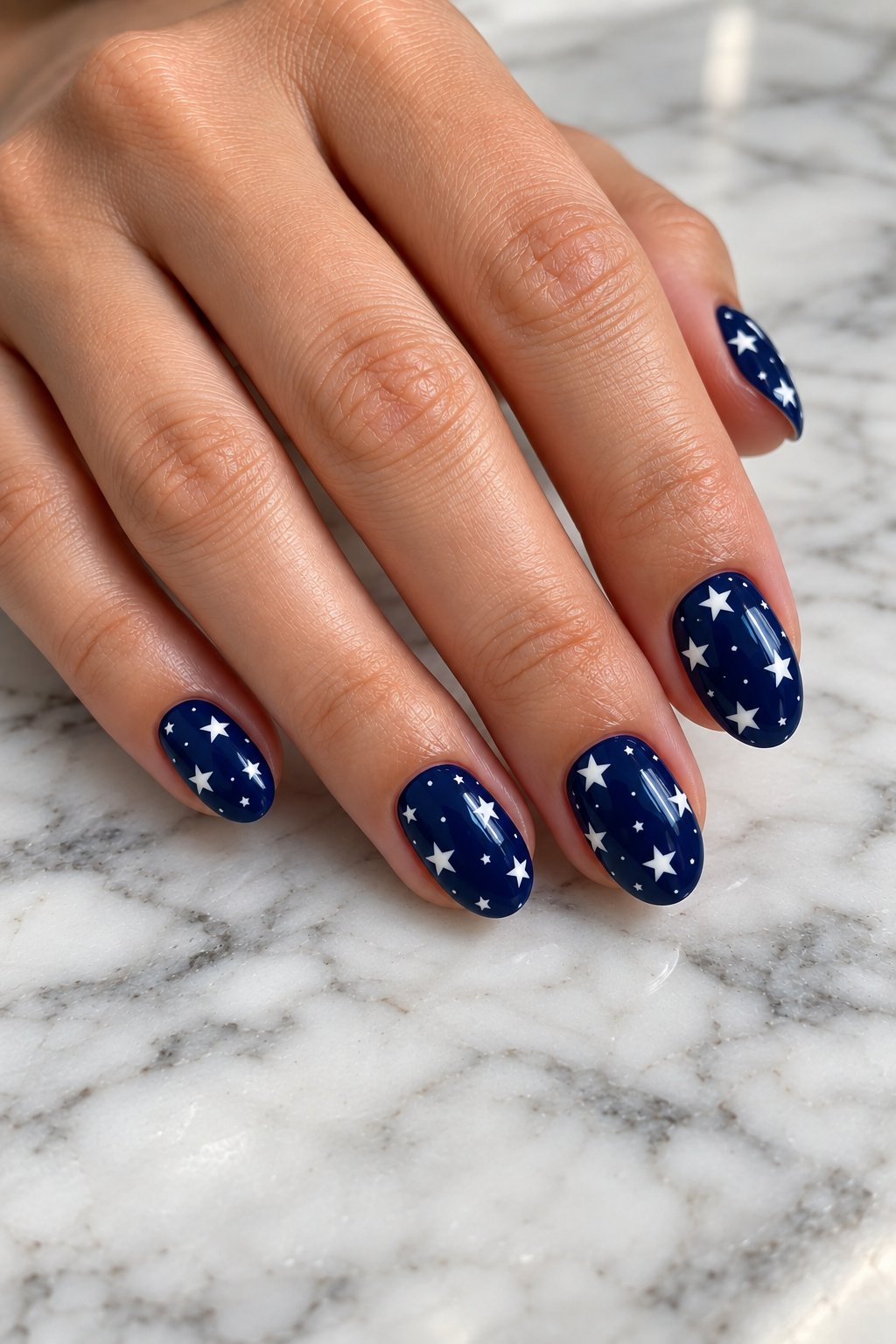
A solid navy base scattered with small white stars gives you a design that reads as whimsical without needing much technical skill. It’s one of the more forgiving detailed designs on this list, since stars of slightly varying size actually add to the effect rather than looking like a mistake.
Paint your navy base and let it dry fully, then use a fine detail brush or a dotting tool to add small white star shapes scattered unevenly across each nail, some larger, some just tiny dots to suggest distant stars. Varying the density (denser near the cuticle, sparser toward the tip, or vice versa) gives the design more visual movement than evenly spaced stars would.
Best for: evening events, New Year’s, and anyone who wants a design with a bit of whimsy that still reads as sophisticated thanks to the deep navy base. It also happens to be one of the more forgiving designs to touch up mid-week, since adding one or two extra stars easily covers a small chip.
6. Navy and White Wave Nails
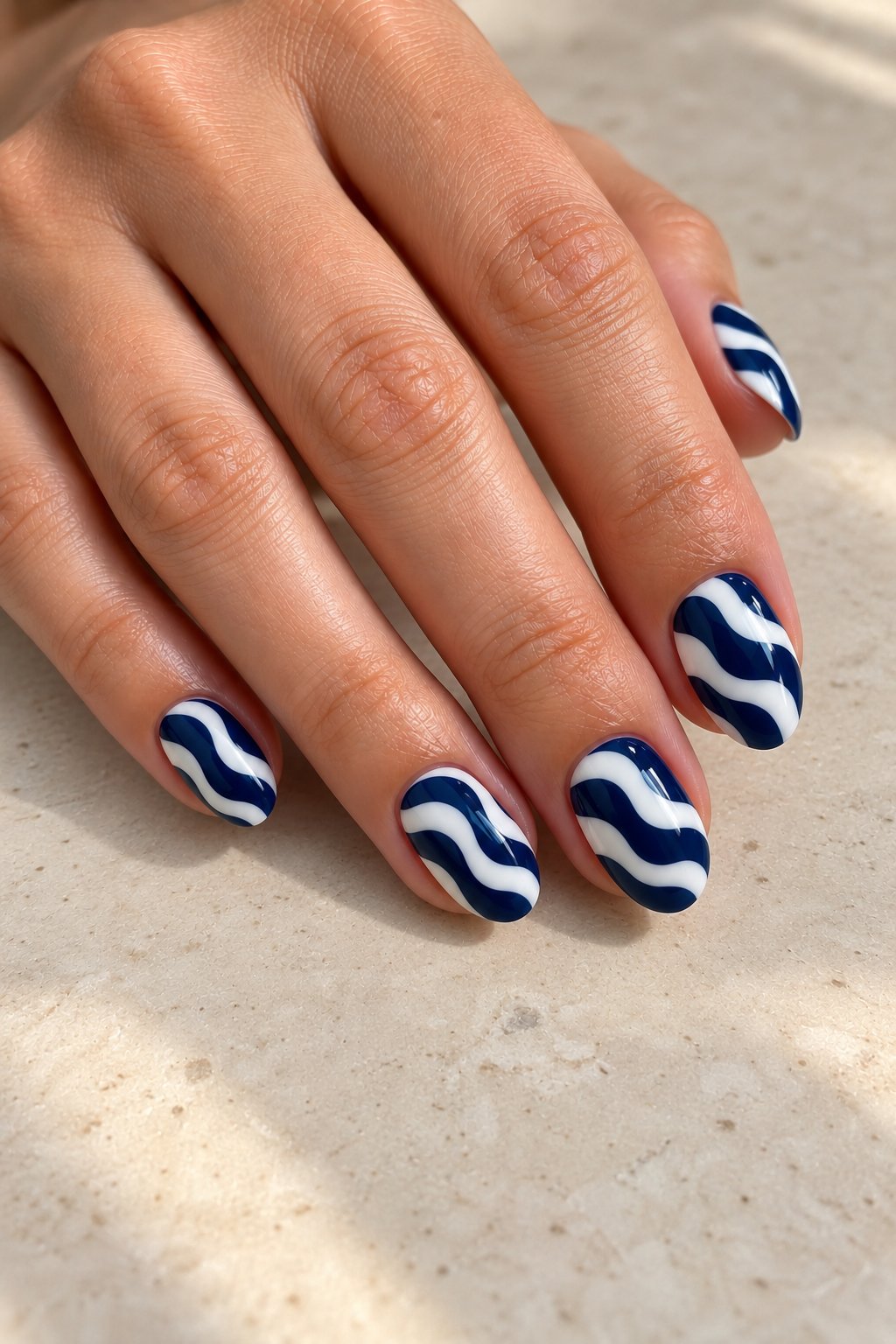
Bold, wavy stripes in navy and white give a design that feels energetic and a little retro, closer to a vintage swimsuit pattern than a traditional manicure. The thick, confident waves shown here read clearly even from a distance, which makes this one of the more eye-catching designs on this list.
To paint this, use a medium brush and draw a continuous S-curve wave from base to tip in navy, leaving even gaps of the white base color showing between each wave. Keeping the waves consistent in width matters more than keeping them perfectly smooth, since a bit of natural wobble in the curve actually reads as intentional and hand-painted rather than sloppy.
Best for: summer and beach vacations specifically, and for anyone who wants a design bold enough to work as a statement set on its own without any additional jewelry or accessories. A thinner brush and more waves per nail gives a calmer, more subtle version if the bold look shown here feels like too much.
Keeping a Two-Tone Design Looking Crisp
Clean lines matter more in a two-color design than in a solid manicure, since any bleeding or unevenness between navy and white stands out immediately against the sharp contrast. Cleaning up edges with a small angled brush dipped in acetone right after painting, before the polish fully sets, is the single most effective habit for keeping these designs looking professional.
A glossy top coat also does more visual work on navy and white specifically than on most other color combinations, since the shine helps the white read as crisp rather than dull or chalky. Reapplying that top coat every two to three days keeps both colors looking fresh even as the rest of the manicure starts to show normal wear.
DIY Painting or Booking a Salon Appointment?
The French tip and starry night designs are realistic to paint at home with basic tools and a bit of patience. Checkerboard, gingham, marble, and wave patterns take more precision, and while all four are technically possible to do yourself, expect your first attempt to take considerably longer than a solid color would, and don’t be discouraged if the lines aren’t perfectly even.
A salon appointment makes the most sense for the more detailed patterns specifically, since a steady, practiced hand makes a real visible difference in how clean checkerboard and gingham lines look. Bringing one of the reference images above gets you a far closer result than describing the pattern out loud.
Frequently Asked Questions
What’s the easiest navy and white nail design for beginners?
The classic French tip and the starry night design are both forgiving for beginners, since neither requires perfectly straight lines or evenly spaced detail. Checkerboard and gingham take considerably more practice to get looking clean.
Do I need special tools for these designs?
A thin detail brush and a striping brush cover most of what’s needed here. Striping tape is a helpful shortcut for the checkerboard and gingham patterns specifically, since it gives you straight, even lines without needing to freehand a grid.
How long does navy and white nail art typically last?
Regular polish lasts five to eight days before chipping starts to show, with detailed patterns like checkerboard sometimes showing wear a little sooner at the intersections where colors meet. Gel versions of the same designs last two to three weeks.
Does navy nail polish stain natural nails?
It can, if applied without a base coat. Always use a base coat under navy or any dark polish, and remove it properly with acetone rather than peeling, to avoid any staining or thinning of the natural nail underneath.
What outfits pair well with navy and white nails?
This combination is genuinely versatile, working with denim, neutrals, and nautical or preppy styles particularly well. White or navy accessories echo the manicure directly, while gold jewelry tends to stand out more against navy than silver does.
Can I mix two of these designs into one manicure?
Yes, and it’s an easy way to make a set feel more custom. A French tip base with one or two accent nails in checkerboard or stars, rather than doing the detailed pattern across all ten nails, cuts the painting time significantly while still reading as intentional.
What’s the difference between navy and regular dark blue for nails?
Navy leans slightly toward black, with almost no visible undertone, while a regular dark blue keeps more blue saturation and can look brighter under certain lighting. Navy tends to read as more formal and versatile, while a brighter dark blue leans more casual and noticeable.
How much does professional navy and white nail art typically cost?
Pricing varies by region and salon, but detailed patterns like checkerboard and gingham usually cost more than a solid color or simple French tip, since they take longer to execute cleanly. A French tip or starry design typically only adds a small amount over a standard manicure price.
Navy and white earns its place as a nail art staple honestly. The contrast is sharp enough to carry real visual interest, the color combination suits nearly everyone, and the six designs above range from a five-minute French tip to a more involved checkerboard for anyone who wants to spend the extra time. Start with whichever design matches how much patience you have that day, and don’t be afraid to bring a photo to your next salon visit if freehand painting isn’t for you.